Royal Leerdam Carre Wine Glass 28 Cl - 6 Pieces

Bormioli Rocco Uno Inalto Wine Glass 47 Cl - 6 Pieces

Spiegelau Definition Wine Glass 55 Cl - 6 Pieces

Lehmann Grand Blanc Wine Glass 54 Cl - 6 Pieces

The Kir Royal recipe
for your table
What did you think of this recipe?
One click on a star is all it takes. If you’d like to add a comment, we’ll review it before it appears here.
Save this recipe
Send the Kir Royal recipe to your own email, so you have it on hand when you’re ready to make it. You’ll also receive a €5 discount code on orders over €50 for the glasses that go with it.
The story
The regular Kir is white wine with crème de cassis, and it takes its name from Félix Kir. He was a priest, resistance hero, and mayor of Dijon. After the war, he served the drink at every official reception to showcase two regional products from Burgundy: Aligoté wine and blackcurrant liqueur. His guests took the recipe home, and that’s how it spread around the world. The Royal came later, when champagne took the place of wine. Bubbles simply make it more festive. In France, it’s still the classic aperitif at a celebratory dinner.
The right glass
For a Kir Royal, choose a classic flute of 18 to 27 cl. In that narrow glass, you can see the color beautifully fade from deep red to pink, and the mousse stays in it longer. If you often serve sparkling wine, from Kir Royal to New Year’s Eve, a set of good flutes will come in handy. Serve a regular Kir made with dry white wine in a glass from our wine glasses.

RCR Ego Champagne Flute 18 cl (6 pieces)

Bormioli Rocco Tre Sensi Champagne Glass / Flute 21 cl (6 pieces)
Both sets together for € 63,90.
The right tools
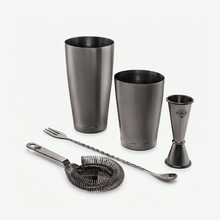
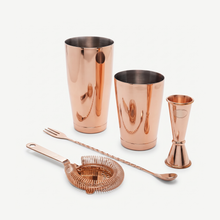
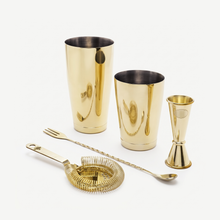
For a Kir Royal, alongside the glass, you’ll need a mixing glass, a bar spoon for stirring, a jigger for precise measuring, and a julep strainer. These are the bar tools we use ourselves; you’ll find them all in our bar tools & cocktail sets.


Glass set (our pick 01) + 4 bar tools for € 91,75.
What do you make a Kir Royal with?
For a Kir Royal, you need champagne. Well-known bottles include De Kuyper and Veuve Clicquot. Each drink page tells you the percentage, what it tastes like, which cocktails it works in, and which glass you need.


Variations & twists
The regular Kir, made with dry white wine, is the affordable original for a weekday. Use raspberry liqueur, and it’s called a Kir Impérial. With peach, it becomes a Kir Pêche. And if you make it with crémant instead of champagne, you’re drinking it the way they do in Burgundy itself, with no fuss. Want more ideas? Browse more than 100 cocktail recipes.
Serving tip
Go easy on the cassis. One centiliter adds enough color and sweetness while letting the champagne shine. Use crémant de Bourgogne instead of champagne for a Dijon-style drink.
Good to know
The ratio of cassis to champagne
Every Kir Royal recipe comes down to the ratio. The classic measure is 1 cl of crème de cassis to 10 cl of champagne, about one-tenth. You can use 2 cl, too, but then it veers toward dessert and you lose the bubbles' dryness. In France, they’re often even more sparing, using barely half a centiliter at the bottom of the glass. Pour the cassis into the flute first, then slowly top it up. There’s no need to stir. The heavier liqueur mixes on its own and creates a gradient of color as it rises. Reverse the order, and the champagne will foam over the rim.
How much alcohol is in a Kir Royal
About 12 percent, just like a glass of wine. In 10 cl of champagne at around 12 percent, there are 1.2 cl of pure alcohol, and the centiliter of cassis at 16 to 20 percent adds a little more. A full flute comes to about 1.4 cl of pure alcohol, slightly more than one standard drink. No ice or water is added, so nothing is diluted. What you pour is what you drink. If you use crémant or prosecco instead of champagne, the percentage barely changes.
Kir drink or Kir Royale, what’s the difference?
It comes down to the base. To make a regular Kir, use dry white wine, traditionally Aligoté in Burgundy. For a Kir Royale, use Champagne or crémant. The cassis and proportions stay the same. That makes Kir the everyday aperitif and a much cheaper option, while the Royale is the festive version, with bubbles and a gradient of color. There’s also a third version, Kir Communard, made with red wine instead of white. Félix Kir himself served the simple Kir drink with local wine and liqueur. Only later did his name become associated with sparkling wine too.
Which cassis and which sparkling wine
Choose a crème de cassis de Dijon with an alcohol content of 16 to 20 percent. Cheap blackcurrant syrup or fruit liqueur tastes jammy and overwhelms the bubbles. Brands such as Lejay, Gabriel Boudier, and Briottet are readily available in the Netherlands. It doesn’t have to be Champagne. Crémant de Bourgogne is actually the most authentic choice and costs about half as much. You can also make a Kir Royale with prosecco, but choose brut, not extra dry, which is sweeter than you might expect from the name. Keep the bottle at 6 to 8 degrees and serve it ice-cold.
What is Kir Royale and when do you serve it
What is Kir Royale, in brief? A French aperitif made with crème de cassis topped with ice-cold Champagne or crémant, served in a narrow flute. Serve it as a Kir Royale cocktail at the start of the evening, before the meal. The cassis stimulates the appetite without filling you up. Wait until everyone has arrived before pouring. A flute that sits for ten minutes has already lost its bubbles. Don’t have any flutes? Use a narrow wine glass instead of a wide coupe, because the bubbles disappear faster in a wide glass.
Kir Royale recipe for a whole bottle
The Kir Royale recipe is easy to scale up for a whole bottle. A 75 cl bottle of sparkling wine gives you seven 10 cl glasses, so you need a total of seven centiliters of crème de cassis. Don’t mix anything in a carafe beforehand, as the bubbles will be gone within a few minutes. Instead, set out the flutes with the liqueur already at the bottom and pour in the sparkling wine once your guests are seated. That way, every Kir Royale cocktail is equally fresh, and everyone can watch the color appear. In between pours, put the bottle back in the cooler.
Frequently asked questions
What goes into a Kir Royal?
There are two ingredients: 1 to 2 cl crème de cassis and 10 cl well-chilled champagne or crémant. If you like, garnish it with a fresh blackberry or blackcurrant. Add the liqueur first, then slowly top up with bubbles. Don't stir; the crème de cassis will blend on its own, creating a beautiful color gradient.
What is the difference between Kir and Kir Royal?
The regular Kir is the original, dry white wine with a dash of crème de cassis, traditionally made with Bourgogne Aligoté. For a Kir Royal, you swap the wine for champagne or crémant. The same liqueur and the same ratio, just with bubbles, making it instantly more festive.
Is Kir Royal sweet?
A little sweet, but not syrupy, as long as you go easy on the crème de cassis. One centiliter of liqueur to 10 cl brut champagne adds color and a hint of sweetness while keeping the bubbles intact. Add 2 cl, and it quickly becomes a dessert drink. Taste it yourself and adjust it for your guests.
What is the right ratio for a Kir Royal?
Use one part crème de cassis to eight to ten parts champagne, so 1 cl liqueur to 10 cl bubbles. In Burgundy, they deliberately keep it dry. In a narrow 18 to 27 cl flute, the color gradient is most visible and the mousse lasts longer. Take a look at our champagne flute glasses.
Everything for your bar,
to one address
Hospitality-quality glasses, delivered in sets. Order today, delivered quickly.
Shop the glasses →