





Cognac
Cognac is neither whisky nor liqueur: it is wine that has passed twice through a copper still and then aged for years in French oak. What it is, what the letters mean and how to drink it.


The best-known cognac brands
The major houses are all in or near the town of Cognac, and blend themselves from eaux-de-vie they buy from hundreds of winegrowers.
Hennessy
The world's largest cognac house, founded by an Irish officer in French service. Round and full-bodied, with plenty of vanilla and dried fruit, from VS to Paradis.
About Hennessy →Rémy Martin
The house with the centaur, which has blended exclusively from Grande and Petite Champagne since 1724. Recognizable by notes of apricot, figs and delicate oak.
About Rémy Martin →
Grand Marnier
Not a cognac but a cognac-based liqueur with bitter orange added. Proof that cognac pairs perfectly with fruit.
About Grand Marnier →Our drinks page lists all the brands we cover, from cognac to whisky.
Every cognac listed by brand
3 brands and 9 flavors, each with its own page covering flavor, cocktails and the right glass.


Wine that passes twice through a copper still
Cognac begins as wine, and as a wine you would not want to drink. The grape is almost always Ugni Blanc: it produces a thin, acidic white wine with little alcohol, and that is exactly what makes it ideal for distilling. The wine passes twice through a copper still of the type known there as an alambic charentais. The first pass produces a cloudy distillate; the second separates it into head, heart and tail. Only the heart goes into the cask.
That is where aging begins, in barrels made from French oak from forests such as Limousin and Tronçais. The wood gives color, vanilla, clove and a light tannic structure, while the porous walls of the cellars allow part of the contents to evaporate each year: the angels’ share. Cognac is almost always a blend of dozens of eaux-de-vie of different ages, and must be bottled at a minimum of 40 percent alcohol. What you read on the label about age refers to the youngest eau-de-vie in the blend.
The region itself is divided into crus, and that division follows the soil. Grande Champagne and Petite Champagne lie on the most limestone-rich soil and produce fine, floral cognacs that mature slowly and require years of patience. Borderies is the smallest cru and is known for a round, nutty style with subtle violet notes that is ready relatively early. Fins Bois is by far the largest, producing supple, fruity eaux-de-vie that provide many blends with their backbone. If the bottle says Fine Champagne, everything comes from the first two crus, and at least half is Grande Champagne.
In brief
The letters on the label indicate a minimum age
VS, VSOP and XO say nothing about taste or quality in themselves, but everything about how long the youngest eau-de-vie in the blend has aged at a minimum.
VS
The entry-level category, also often called Trois Étoiles. Lively and slightly spicy, with vanilla and toasted oak. Strong enough to hold its own in a cocktail.
VSOP
The all-rounder of the category. Rounder and sweeter than VS, with ripe fruit, cinnamon and a distinct note of oak. Easy to drink neat and still great for mixing.

XO
Since 2018, the minimum has been ten years, and in practice it goes well beyond that. Deep and rich, with cocoa, candied fruit and spices. A bottle to serve neat.

Hors d'âge
Literally “outside the age categories”: blends of very old eaux-de-vie for which no higher official classification exists. Silky smooth and floral, with a finish that lasts for minutes.
Napoléon means at least six years, and Fine Champagne means that the blend comes only from Grande and Petite Champagne.
Ripe fruit, vanilla and warm oak
Grape & dried fruit
Ripe grape, apricot and raisin, with vanilla and a hint of cinnamon from the cask. The older the blend, the more cocoa, cigar box and candied orange join the mix.
Round and smooth
Full and oily, with a natural sweetness that comes not from sugar but from the wood and grapes. A VS is still somewhat sharp here; an XO is velvety.
Long and warm
Warm, with wood, spices and dried fruit that slowly fades away. Older cognacs retain a floral note typical of the chalky soils of the Champagne crus.
Flavor profile of a VSOP. A VS is sharper and scores higher in strength; an XO moves toward sweetness 4 and spiciness 3, as the wood has done its work for years.
Three ways to drink cognac
Cognac doesn't always have to be solemn. Drink an XO neat, but a VS is excellent with ice, tonic or in a cocktail.
Straight from a tulip glass
Pour 3 to 4 cl into a tulip-shaped glass and drink it at room temperature. Don't warm it over a flame: that mainly drives alcohol up to your nose. The warmth of your hand around the bowl of the glass is exactly enough.
View cognac glasses →On the rocks or with tonic
Pour 4 cl VS or VSOP over a large ice cube in a tumbler, or top with 12 cl ice-cold tonic and a slice of orange. The ice opens up the aromas and turns a robust cognac into a surprisingly refreshing long drink.
View tumblers →In a Sidecar
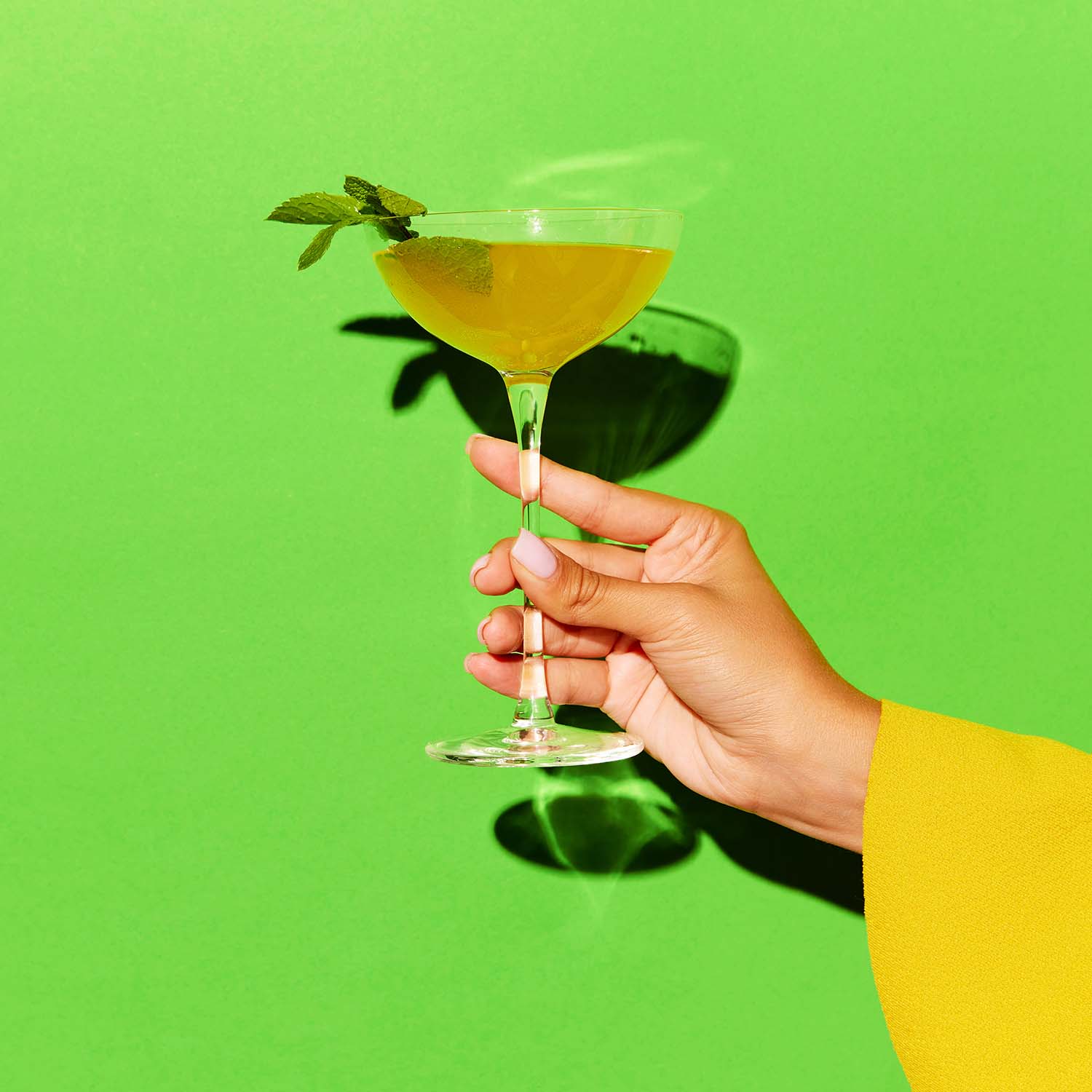
Shake 5 cl cognac, 2 cl triple sec and 2 cl fresh lemon juice firmly with ice, then strain into a chilled coupe. A sugared rim on half the glass is optional, and softens the acidity just enough.
Sidecar recipe →The best-known cognac cocktails
Cognac was behind most bars in the nineteenth century, so many classics began with it.

Sidecar
Cognac, triple sec and lemon. Sour, sweet and warm in a single sip.
Brandy Alexander
Cognac, cocoa liqueur and cream, with nutmeg. A dessert in a glass.
Sazerac
In the original version, with cognac instead of rye whiskey.
French 75
Originally made with cognac, but nowadays usually with gin. Try both.The right glass for cognac
For neat cognac, you want a glass that narrows toward the top so the aromas are concentrated. With ice or in a cocktail, different rules apply.


Everything you still wanted to know about cognac
Can't find your question here? Check out our cocktail recipes or get in touch.
To the cocktail recipes →