

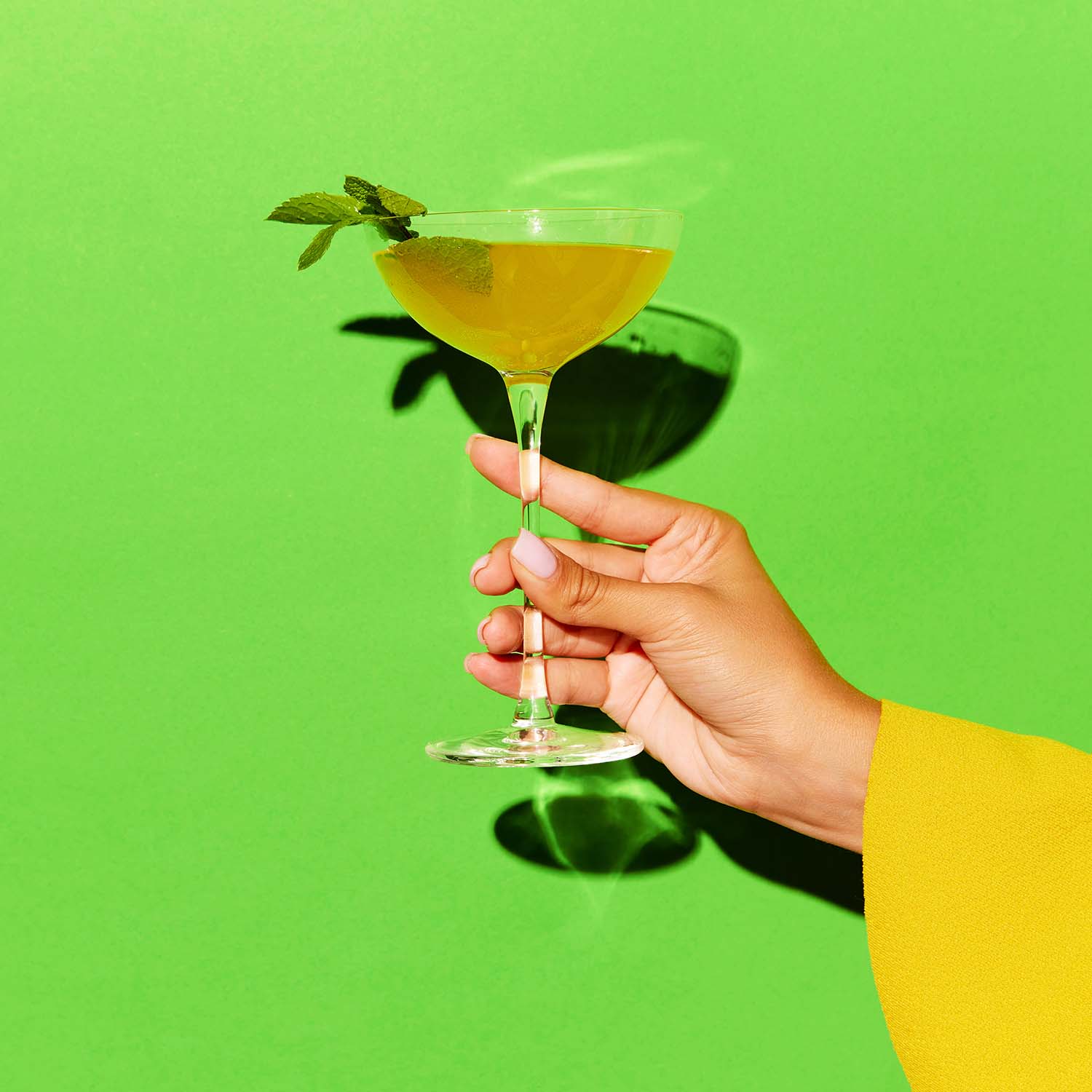




The Between the Sheets recipe
equal parts, shaken cold
Place the coupe in the freezer for ten minutes, because the cocktail goes into the glass without ice.
Fill the shaker with ice and shake vigorously for 15 seconds, until the outside feels ice-cold.
Double strain the cocktail into the chilled coupe, so no ice shards end up in the glass.
What did you think of this recipe?
One click on a star is enough. If you would like to add something, we will read it first before it appears here.
Save this recipe
Send the recipe for the Between the Sheets to your own email, so you have it at hand when you make it. You will receive a €5 discount code on orders from €50 for the glasses that go with it.
The story
The exact origin of Between the Sheets cannot be established with certainty. The drink is usually attributed to Harry MacElhone of Harry's New York Bar in Paris, who is said to have derived it from the Sidecar in the 1920s or 1930s. Another story places its origin around 1921 at the Berkeley Hotel in London. Neither account has been proven. The drink does fit the era: during Prohibition in the United States, Harry's New York Bar attracted many Americans who could legally drink in Paris, and cocktails with cognac and orange liqueur were fashionable there. The suggestive name, literally 'between the sheets', also belongs to the relaxed atmosphere of the 1920s. The IBA classifies the drink among the Unforgettables.
The right glass
Between the Sheets is served without ice in a chilled cocktail glass, and a coupe is the logical choice for this. With 11 cl of ingredients and the meltwater from shaking, you end up with around 14 cl, so a 22 to 26 cl coupe leaves enough room to move without spilling. The rounded bowl holds the orange aroma of the triple sec. A martini glass works too, but a full drink spills over the rim more quickly in one. View our coupe glasses.

RCR Timeless Champagne Glass / Coupe 26 cl (6 pieces)

Bormioli Rocco America'20S Champagne Glass / Coupe 22 cl (6 pieces)
Both sets together € 79,90.
The right tools
For a Between the Sheets, besides the glass you need a Boston shaker, a jigger for precise measuring, a cocktail strainer, a fine strainer for double straining, and a citrus juicer. These are the bar tools we use ourselves; you can find everything in our bar tools & cocktail sets.


Glassware set (our choice 01) + 5 bar tools together € 155,70.
What do you need to make a Between the Sheets?
To make a Between the Sheets, you need rum and cognac. Popular bottles include Cointreau, Bacardi and Havana Club. On each drink page, you can read the alcohol percentage, what it tastes like, which cocktails it works well in and which glass you need.


Variations & twists
If you find the IBA version too sweet, reduce the triple sec to 2 cl; many bartenders do this, making the drink drier and fresher. If you leave out the rum, you have the Sidecar. Replace the rum and cognac with gin, and you get the Maiden's Prayer, a relative of the White Lady. For the oldest predecessor in this family, made with maraschino and a sugared rim, see the Brandy Crusta.
Serving tip
Press the lemon just before you shake; juice that is a few hours old makes the drink taste flat. Serve it as an aperitif with salted almonds: the salt brings out the orange notes in the triple sec.
Good to know
Making Between the Sheets: the proportions
The IBA recipe is easy to remember: 3 cl white rum, 3 cl cognac, 3 cl triple sec, and 2 cl fresh lemon juice. That is three equal parts plus slightly less acid. Because the triple sec is also sweet, there is no simple syrup. The proportions produce a drink on the sweeter side of a sour, comparable to a Sidecar. If you want it sharper, reduce the triple sec to 2 cl or increase the lemon juice to 2.5 cl. Taste with a straw before straining; you can still adjust it then.
Difference between Between the Sheets and Sidecar
The Sidecar is made with cognac, triple sec, and lemon juice. Between the Sheets shares the cognac with white rum, making the drink lighter and drier in character: the rum brings sugarcane and a fresh, almost grassy note, while the cognac retains the warm fruit. Both are served without ice in a coupe, and both are shaken. You taste the biggest difference in the finish: long and round in the Sidecar, shorter and fresher in Between the Sheets. If you find the Sidecar too heavy for a summer evening, this is a good alternative.
Which rum and which cognac
Choose a light, dry white rum in the Cuban or Puerto Rican style, like the kind you also use for a Daiquiri. A heavy, funky Jamaican rum overpowers the cognac. For the cognac, a VS or VSOP is the right choice: enough fruit and oak to stand out among the citrus, but not so expensive that you would rather drink it neat. An XO would be a waste here. Armagnac or a good French brandy also works, although the drink will be slightly rougher. Use both bottles at room temperature; shaking does the rest.
Triple sec, Cointreau, or curaçao
Triple sec is a general term for orange liqueur, and the quality varies considerably. Cointreau is 40 percent ABV and has a clear, intense orange flavor; it works best with the IBA proportions. Cheaper triple secs are often weaker and sweeter, which makes the drink sticky. If you use one of those bottles, use 2 cl instead of 3. A dry curaçao based on cognac gives a rounder, slightly more bitter version. Grand Marnier also works, but it is already cognac-based and makes the drink heavier.
How much alcohol is in Between the Sheets
More than meets the palate. The 3 cl of rum, 3 cl of cognac and 3 cl of Cointreau are all around 40 percent and together provide about 3.6 cl of pure alcohol. After fifteen seconds of shaking, the glass contains about 14 cl, so you are drinking a cocktail of around 26 percent. That is almost three standard drinks in one coupe. The citrus and orange mask this well, which is why it goes down quickly. When serving a group, use a smaller coupe with half the recipe, or reduce the triple sec to 2 cl.
Making Between the Sheets without a shaker
If you do not have a shaker, use a clean jam jar with a tightly closing lid. Add the ingredients, fill it two-thirds with ice, tighten the lid and shake vigorously for fifteen seconds with a tea towel wrapped around it, as the jar gets ice-cold. Then strain through a tea strainer into the coupe to keep out ice shards. The result comes close to the real thing. If you make cocktails more often, a shaker quickly pays for itself; see our cocktail shakers.
Frequently asked questions
What is in Between the Sheets?
Between the Sheets consists of 3 cl white rum, 3 cl cognac, 3 cl triple sec and 2 cl fresh lemon juice. Shake everything with ice for fifteen seconds and double-strain into a chilled coupe. The IBA does not specify a garnish; a lemon zest is optional.
What does Between the Sheets mean?
It literally means 'between the sheets', a wink at what can happen after a few drinks. It is not known who came up with the name. It fits the playful names cocktails were given in the 1920s and 1930s, when the drink emerged in Paris and London.
Is Between the Sheets a strong cocktail?
Yes, with around 26 percent alcohol in the glass, it is strong. It contains 9 cl of rum, cognac and triple sec, together nearly three standard drinks. Because lemon and orange hide the alcohol well, it drinks lighter than it is. Take your time and have a glass of water with it.
Which glass do you use for Between the Sheets?
A chilled coupe holding 22 to 26 cl. The cocktail goes into the glass without ice, so you want a stem to keep the drink cold and enough room to avoid spilling. A martini glass works too, but the coupe is more stable and retains the aroma better.
Everything for your bar,
to one address
Hospitality-grade glasses, supplied per set. Order today, delivered quickly.
Shop the glasses →