

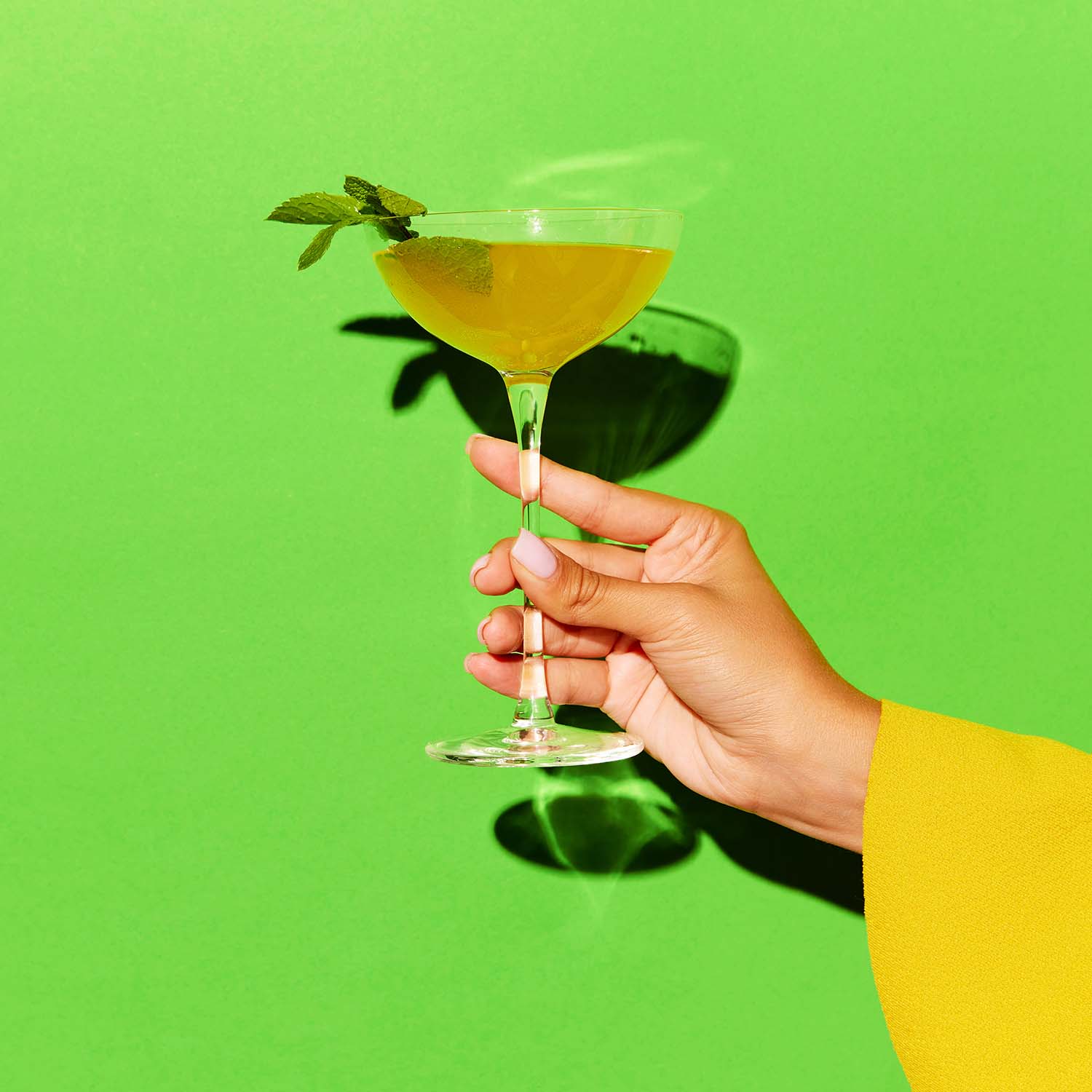




The Sazerac recipe
for your table
Pre-chill a tumbler with ice, discard the ice, and swirl absinthe around the glass; drain off the excess.
In a second glass, muddle the sugar cube with the bitters and a few drops of water.
Add the rye and ice and stir for 25 seconds; then strain into the absinthe glass, without ice.
Squeeze a lemon zest over the glass and place it on the rim (or throw it away, as purists do).
What did you think of this recipe?
One click on a star is all it takes. If you'd like to add something, we'll read it first before it appears here.
Save this recipe
Send the Sazerac recipe to your own email so you have it handy when you're ready to make it. You'll also receive a €5 discount code for purchases of €50 or more, for the glasses that go with it.
The story
The story begins around 1838 with Creole pharmacist Antoine Peychaud, who mixed his homemade bitters with French Sazerac-de-Forge cognac. When phylloxera devastated Europe's vineyards, New Orleans bars switched to rye whiskey, and the absinthe rinse became a fixed part of the ritual. After absinthe was banned in 1912, Herbsaint took over the role, but today the original is legal again. In 2008, the state of Louisiana officially declared the Sazerac the cocktail of New Orleans, a unique distinction in American history.
The right glass
In New Orleans, the Sazerac is traditionally served in a small, low glass without ice. A compact tumbler of 20 to 25 cl is ideal: its modest size keeps the cocktail cold and concentrated, while the glass beautifully captures the aromas of absinthe and lemon. Use the larger model from the same series for your Old Fashioned, giving you a consistent style on the table. The same compact tumbler also works well for whisky neat, and you can find more sizes in our whiskey glasses.

Chef & Sommelier Vigne Kwarx Tumbler 20 cl (6 pieces)

Eclat Longchamp Tumbler 23 cl (6 pieces)
Both sets together € 50,90.
The right tools
For a Sazerac, besides the glass, you use a bar spoon for stirring, a jigger for precise measuring, a bitters bottle, and a zester for the twist. These are the bar tools we use ourselves; you can find everything in our bar tools & cocktail sets.


Glass set (our choice 01) + 4 bar tools together € 81,75.
What do you make a Sazerac with?
For a Sazerac, you need cognac. Well-known bottles include Hennessy and Rémy Martin. On each drinks page, you can read the alcohol percentage, what it tastes like, which cocktails it goes with, and which glass you need.


Variations & twists
The original was made with cognac. Half rye, half cognac is a wonderful middle ground. No Peychaud's? Strictly speaking, it isn't a Sazerac, but with Angostura and an extra lemon zest, you can still make an excellent whiskey cocktail. The absinthe rinse can also be made with pastis or Herbsaint. Looking for more inspiration? Browse more than 100 cocktail recipes.
Servingtip
The absinthe rinse is not a detail but the soul of this cocktail: a few drops are enough; the aroma does the work. Don't have Peychaud's at home? Just order it online. Angostura really makes a different cocktail.
Good to know
The proportions and how strong it is
Six centiliters of rye whiskey, one sugar cube, and three dashes of Peychaud's bitters: that's the entire build, which is precisely why every milliliter counts. If you stir it on ice for 25 seconds, about one and a half centiliters of melted water are added, leaving you with roughly 8 cl of drink. In the glass, that works out to around 30 to 35 percent, depending on how strong your rye is. That's substantial, and it's precisely why this cocktail is served without ice in a small 20 to 25 cl glass: small, cold, and concentrated.
Sazerac or Old Fashioned: the difference
Both classics are stirred whiskey cocktails with sugar and bitters, but they finish completely differently. The Sazerac uses rye, three dashes of Peychaud's bitters, and a glass rinsed with absinthe, and is served without ice. The Old Fashioned gets Angostura, an orange zest, and stays on a large ice cube, causing it to dilute slowly and become increasingly softer. In short: with an Old Fashioned, you sit with it for half an hour; you drink a Sazerac concentrated and finish it in about twenty minutes.
The absinthe rinse and what to use instead
One bar spoon of absinthe is enough, or about 5 milliliters. First chill the glass with ice, discard the ice, swirl the absinthe around the entire inside of the glass, and pour off the excess. What remains is a film of less than a milliliter, and that film determines the aroma of every sip. If you don't have absinthe, pastis and Herbsaint are excellent substitutes; Herbsaint was the standard in the United States for decades when absinthe was prohibited. A 70 cl bottle will make hundreds of cocktails when used this way.
Buying and measuring Peychaud's bitters
Peychaud's is not Angostura: the bitters from New Orleans are lighter, more floral and distinctly anise-like, giving the cocktail its red hue. Three dashes amount to approximately one milliliter, which is enough to bring the sugar cube and rye together. In the Netherlands, you can find a 14.8 cl bottle online and at better liquor stores, usually for ten to fifteen euros. Careful measuring pays off not only in flavor: with that one bottle, you can easily make one hundred and fifty cocktails.
Frequently asked questions
What is in a Sazerac?
A Sazerac consists of 6 cl rye whiskey, a sugar cube, three dashes of Peychaud's bitters and a glass rinsed with absinthe, finished with lemon zest. You stir the drink with ice and then strain it without ice into the chilled glass, keeping the flavor concentrated.
What is the difference between a Sazerac and an Old Fashioned?
The Sazerac uses rye whiskey with Peychaud's bitters and an absinthe rinse and is served without ice; the Old Fashioned gets Angostura, an orange zest and a large ice cube. Both are stirred whiskey classics, but the Sazerac is more spiced and aromatic in character.
Which glass do you use for a Sazerac?
A 20 to 25 cl low tumbler is the classic choice: small enough to keep the cocktail cold and concentrated, and wide enough to hold the aromas of absinthe and lemon. For hospitality-quality sets, see our old fashioned glasses.
Can you make a Sazerac without Peychaud's bitters?
Strictly speaking, no: Peychaud's gives the Sazerac its anise-like, floral character and red hue. Angostura still makes an excellent whiskey cocktail, but the flavor profile shifts noticeably. You can replace the absinthe rinse with pastis or Herbsaint, which was the standard for years after absinthe was banned.
Everything for your bar,
to one address
Glasses in hospitality quality, delivered per set. Order today, delivered quickly.
Shop the glasses →