

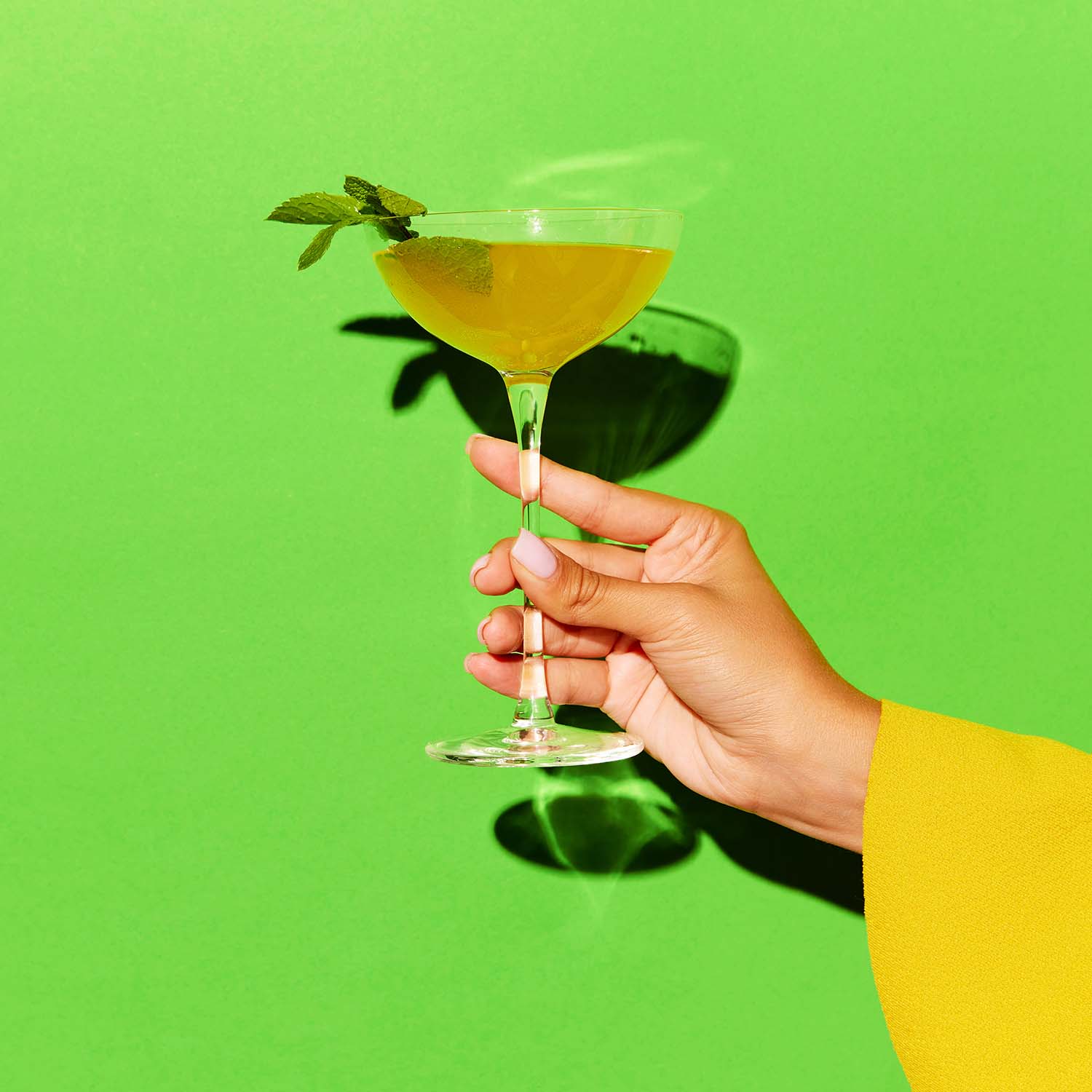




The Eggnog recipe
one glass, in three minutes
Place the tumbler in the freezer for fifteen minutes.
Add the egg, the cognac, the rum, the sugar syrup, the milk, and the heavy cream to the shaker and shake for 10 seconds without ice: this dry shake breaks up the egg and makes the drink creamy.
Fill the shaker with ice and shake vigorously for another 15 seconds, until the outside feels ice-cold.
Double strain into the chilled glass, so strands of egg and ice chips remain in the strainer.
Grate fresh nutmeg over it and drink it immediately.
What did you think of this recipe?
One click on a star is enough. If you’d like to add something, we’ll read it first before it appears here.
Save this recipe
Send the Eggnog recipe to your own email so you’ll have it at hand when you’re about to make it. You’ll also receive a €5 discount code on purchases from €50, for the glasses that go with it.
The story
Eggnog is thought to derive from posset, a medieval British drink made from warm milk curdled with wine or beer. In the American colonies, it took shape: milk, eggs, and sugar were readily available in rural areas, and rum from the Caribbean was inexpensive. The oldest known mention of the word appears in a poem by Maryland clergyman Jonathan Boucher, dating from around 1775; it first appeared in a newspaper in 1788. Its further origins remain uncertain: perhaps from noggin, a small wooden drinking cup, or from a strong beer from East Anglia. In 1862, Jerry Thomas included an Egg Nogg made with cognac and rum in his bar book, shaken with ice and finished with nutmeg. George Washington is credited with a version made with rye whiskey, rum, and sherry.
The right glass
Jerry Thomas served his eggnog in a tumbler, and it is still the most practical glass: straight, sturdy, and with a thick base that retains the cold well when you chill it in the freezer beforehand. A 32 to 38 cl tumbler leaves room for a generous 20 cl portion with a layer of foam and nutmeg on top. If you’re making a bowl for a group, use smaller glasses, as eggnog is rich. View our tumblers.

Eclat Longchamp Tumbler 32 cl (6 pieces)

RCR Aria Tumbler 38 cl (6 pieces)
Both sets together € 63,90.
The right tools
For an Eggnog, besides the glass, you’ll need a Boston shaker, a jigger for precise measuring, a cocktail strainer, a fine-mesh strainer for double straining, and a nutmeg grater. These are the bar tools we use ourselves; you’ll find everything in our bar tools & cocktail sets.


Glassware set (our choice 01) + 5 bar tools together € 147,70.


Variations & twists
In America, bourbon is often used instead of cognac, and some people use only rum. Puerto Rico has coquito, made with coconut milk and rum; Mexico has rompope, made with cinnamon. For warm eggnog, heat milk, cream, and sugar and slowly stir in the beaten egg. Lighter and more elegant is the Porto Flip, with port, brandy, and egg yolk. And the Dutch cousin, advocaat, is enjoyed as a Snowball with lemon soda.
Serving tip
Grate the nutmeg at the very last moment, because its aroma fades within a few minutes. Use a whole nut and a fine grater; ground nutmeg from a jar quickly smells musty. A cinnamon stick can be used as a stirrer, but it is not necessary.
Good to know
Eggnog and advocaat: the connection
Eggnog and advocaat are related: both contain eggs, sugar, and spirits. Advocaat is the Dutch egg liqueur, made with egg yolks, sugar, and brandy, and so thick that here you eat it with a small spoon, often topped with whipped cream. Under European rules, advocaat must contain at least 14 percent alcohol. Eggnog uses the whole egg plus milk and cream, is much thinner, and is made fresh. There is a well-known story about the name advocaat: Dutch colonists in Brazil are said to have made a drink from avocados and, back home, replaced the avocado with egg yolk. There is no solid evidence for this. You can taste advocaat in a cocktail in the Snowball.
Making eggnog without raw egg
If you don't want raw egg, make the cooked version. Beat the egg with the sugar syrup. Heat the milk and cream until steaming, then pour them into the egg in a thin stream while continuing to whisk. Return everything to low heat and stir until the mixture reaches 71 degrees or coats the back of a spoon; do not let it boil, or the egg will curdle. Let it cool, stir in the cognac and rum, and refrigerate for at least two hours. Pasteurized egg from the refrigerated section is the alternative if you want to shake the raw version.
Making eggnog for a group
For six glasses, use 6 eggs, 18 cl of cognac, 18 cl of rum, 12 cl of sugar syrup, 36 cl of whole milk, and 18 cl of heavy cream. Select 6 people in the recipe, and you'll see all the quantities listed. Shaking each glass individually is too much work: blend everything for a minute on low speed, or whisk it in a large bowl. Refrigerate the eggnog for at least an hour so it becomes cold and slightly thicker, and stir it briefly before serving. Grate the nutmeg into each glass. Find more ideas among the cocktails for a group.
What alcohol goes in eggnog
The classic combination is cognac and dark rum, as Jerry Thomas described it in 1862. Cognac adds fruit and rounded warmth, while rum brings caramel and molasses. Bourbon is popular in America; it makes the eggnog sweeter and more vanilla-like. Spiced rum works too, but reduce the sugar syrup slightly. Keep the total at about 6 cl of spirits per glass: any more and the alcohol overwhelms the egg, any less and you're mainly drinking milk. You can also taste how well cognac and cream go together in the Brandy Alexander.
How much alcohol is in eggnog
Count on about 10 percent. The 3 cl of cognac and 3 cl of rum, each at 40 percent, contain a total of 2.4 cl of pure alcohol. With the egg, milk, cream, and syrup added, you end up with about 22 cl, and after shaking with ice, just over 25 cl in the glass. That is almost 19 grams of alcohol, or about two standard drinks. Because eggnog is so creamy and sweet, you barely taste the alcohol. If you're making it for a group, also prepare a non-alcoholic version: replace the spirits with extra milk and a drop of vanilla.
Making eggnog without a shaker
A shaker is useful, but not necessary. Put all the ingredients in a clean jam jar with a tightly fitting lid and shake first without ice, then with a few ice cubes. Or blend everything for twenty seconds on low speed and pour it through a small strainer into the glass. You can also use a whisk in a bowl, but first beat the egg well with the sugar syrup before adding the rest. An immersion blender works fastest. You can find a good shaker in our cocktail shakers.
Frequently asked questions
What is eggnog?
Eggnog is an English and American drink made from egg, sugar, milk, and cream, fortified with spirits such as cognac, rum, or bourbon and finished with nutmeg. It is mainly drunk around Christmas, cold or warm. In terms of flavor, it falls somewhere between vanilla custard and advocaat, but it is much thinner.
Is eggnog the same as advocaat?
No, but they are related. Advocaat is a Dutch egg liqueur made from egg yolks, sugar, and brandy, so thick that you eat it with a spoon. Eggnog uses the whole egg plus milk and cream, is thin enough to drink, and is freshly made with cognac, rum, or bourbon.
Is eggnog with raw egg safe?
Raw egg carries a small risk of salmonella. Therefore, use fresh eggs that have been kept refrigerated, or pasteurized egg from the refrigerator section. If you want to eliminate all risk, make the cooked version and heat the milk, cream, syrup, and egg together to 71 degrees. For people with a weakened immune system, the cooked version is the better choice.
What alcohol goes into eggnog?
The classic is a mix of cognac and dark rum, 3 cl of each per glass. In America, many people use bourbon, sometimes supplemented with rum. Keep the total at around 6 cl of spirits per glass; that way, the flavors of egg, cream, and nutmeg remain prominent.
Everything for your bar,
to one address
Glasses in hospitality quality, supplied per set. Order today, delivered quickly.
Shop the glasses →