

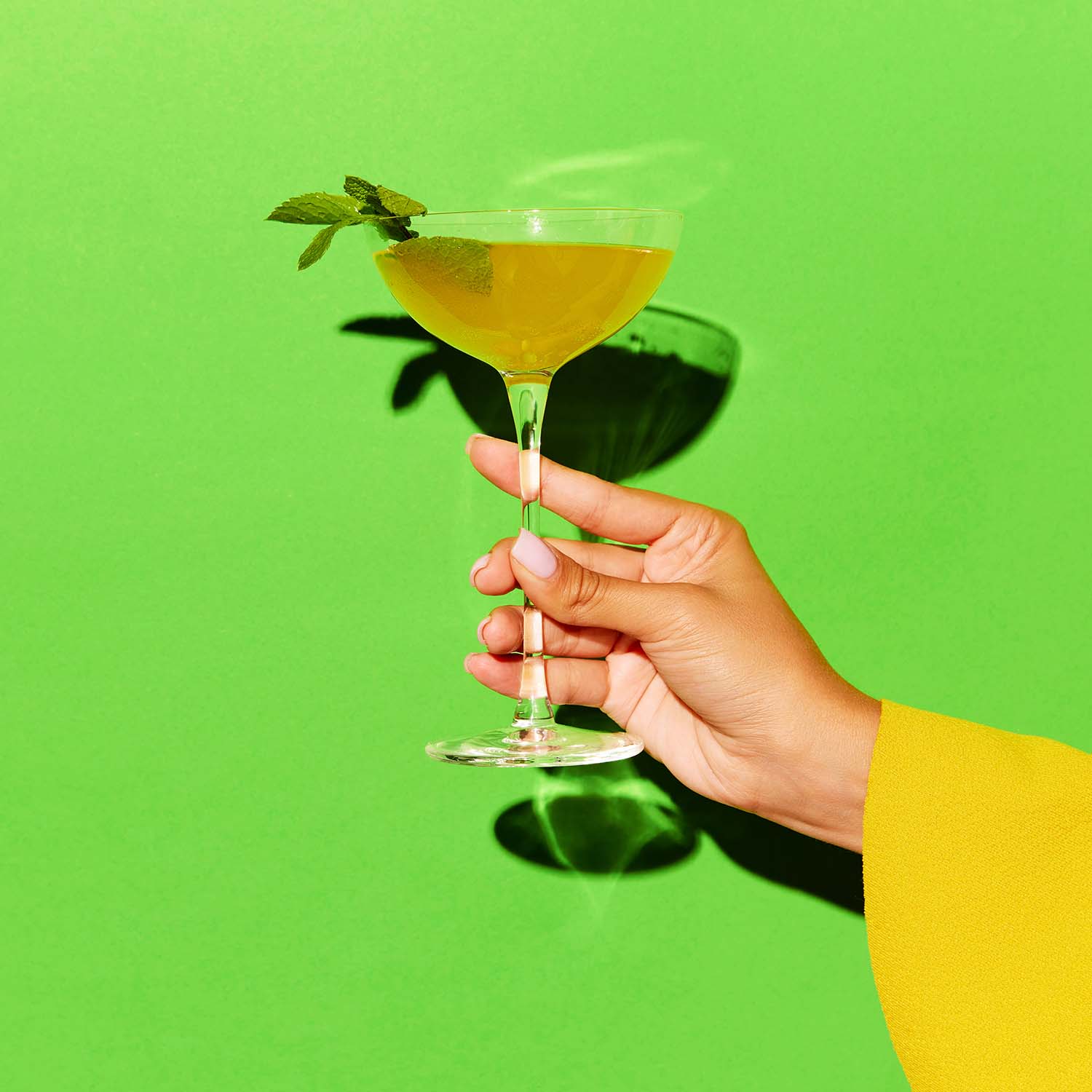




How to pour it
a vermentino in
Place the bottle in the refrigerator for about three hours, so the wine reaches 8 to 10 degrees. Colder than eight degrees and the almond and fennel notes disappear; warmer than ten and the bitterness in the finish becomes dominant. Take the bottle out only just before serving.
Cut all the way around the capsule below the raised ridge on the neck and wipe the rim of the bottle clean. Position the spiral in the center of the cork, turn it straight down until just before the end, and pull the cork out in one smooth motion.
Decanting isn’t necessary for a young vermentino. With a fuller bottle that’s a few years old, half an hour in a decanter can give the almond and fennel more room to express themselves. Otherwise, simply place the bottle in a cooler with water and ice beside the table.
Pour up to about one-third of the glass, and no further. This leaves room above the wine for the aroma, and because there is little in the glass, the last sip stays as cool as the first. It’s better to top up with a small amount more often.
What did you think of these instructions?
One click on a star is enough. If you’d like to add something, we’ll read it first before it appears here.
Save this page
Send this page to your own email so you have the instructions at hand when you’re ready to serve. You’ll also receive a €5 discount code for purchases from €50, for the matching glasses.
The story
Vermentino grows along the Mediterranean and changes its name as soon as you cross a border. In Sardinia, it is the most important white grape, with Vermentino di Gallura in the north of the island as its best-known region. In Liguria, it often grows on steep terraces above the coast, and you also find it along the Tuscan coast. In Provence and Languedoc, the same grape is called rolle, usually as part of a blend. Everywhere, the picture remains the same: a dry white wine with citrus, herbs and a hint of bitterness on the finish, made to accompany what comes from the sea.
The right glass
A glass made specifically for vermentino is not in our range, and as a model it does not really exist either. What the wine does call for is a compact bowl of approximately 27 to 35 centiliters: small enough to keep it cool, spacious enough to let the fennel and almond notes come through. The two bowls below are the sizes that come closest for us. Larger bowls can be found among the large wine glasses; if the bottle stays on the table, a wine cooler does at least as much as the glass.

Luigi Bormioli Incanto Wine Glass 27.5 cl (6 pieces)

Chef & Sommelier Evidence Wine Glass 27 cl (6 pieces)
Both sets together € 72,90.
The right tools
For a vermentino, besides the glass, you mainly need a corkscrew and a wine cooler. The bar tools below only come into play once you turn it into a spritz: a zester for the citrus twist and a citrus juicer for the juice. These are the bar tools we use ourselves; you can find everything in our bar tools & cocktail sets.


Glass set (our choice 01) + 2 bar tools together € 67,85.
What do you serve alongside it?
Vermentino is rarely served on its own. These are the wines that accompany or follow it in the same meal, from a glass of prosecco beforehand to a moscato with dessert. On each drink page, you can read the alcohol percentage, what it tastes like, which cocktails it pairs with and which glass you need.


Variations & twists
Vermentino is not the same everywhere. In Sardinia, the label reads Vermentino di Gallura, from the hilly region in the north, and these are the most highly regarded bottles. Along the Ligurian coast, the wine is often lighter and crisper, with a saltier impression. On the Tuscan coast, you will find rounder versions. If a bottle from Provence or Languedoc says rolle, you have the same grape in your hands, usually alongside other white grapes in the same bottle. Want to read more? View all drinks and brands.
Serving tip
Serve at 8 to 10 degrees and keep the bottle in a cooler in between. Vermentino is the wine to pair with the food eaten along that same coast: grilled and fried fish, shellfish and seafood pasta, and in Liguria, pesto with basil, pine nuts and pecorino. The bitter almond note echoes the pine nuts, while the acidity balances an oil-rich sauce.
Good to know
Vermentino di Gallura
Gallura is the hilly region in northern Sardinia, with lots of weathered granite in the soil. It is the best-known area of origin for vermentino, and wines from there carry the name Vermentino di Gallura on the label. They are often a little fuller and more aromatic than vermentino from elsewhere on the island.
Rolle is the same grape
In Provence and Languedoc, vermentino is called rolle. There, it is usually one of the grapes in a blend, not the entire bottle. So if rolle is on the label, you know what is coming into your glass: the same fresh, slightly bitter style, although it is less pronounced in a blend.
The bitter almond on the finish
Much vermentino finishes with a slight bitterness reminiscent of green almond. That is not a flaw; it is characteristic of the grape. It comes through best at 8 to 10 degrees; as the wine warms, the bitterness begins to dominate instead of rounding out the wine.
The salty note in coastal wines
Vermentino from Liguria and the Sardinian coast is often described as salty, almost reminiscent of the sea. That is a flavor impression, not salt contained in the wine. The sea is often cited as an explanation, but that link cannot be firmly established; what you can say is that the impression is strikingly consistent in this grape.
How much alcohol it contains
Vermentino contains roughly 12 to 13.5 percent alcohol. The exact percentage is stated on the label. Alcohol-free white wine contains less than 0.5 percent and indicates this on the bottle.
How long you can keep it
Most vermentino is intended to be drunk young, within a year or two of harvest, because its freshness is the appealing quality. Fuller-bodied bottles from Gallura can last a little longer. Once opened, a bottle kept in the refrigerator with a stopper will retain its flavor for another two to three days.
Frequently asked questions
What kind of wine is vermentino?
Vermentino is a white grape grown around the Mediterranean, especially in Sardinia, Liguria and on the Tuscan coast. The wine is dry and fresh, with citrus, green almond and fennel, a salty note in coastal wines, and a characteristic slight bitterness in the finish.
At what temperature do you serve vermentino?
Between 8 and 10 degrees, achieved by about three hours in the refrigerator. Colder and the almond and fennel notes disappear; warmer and the slight bitterness in the finish begins to dominate. Keep the bottle in a cooler in between.
Which glass do you use for vermentino?
A compact white-wine glass of about 27 to 35 centiliters. There is no dedicated vermentino glass, so choose according to the wine: small enough to keep it cool, large enough for the aroma. Hold the glass by the stem, not the bowl.
What do you eat with vermentino?
Fish and seafood to start: grilled fish, shellfish and seafood pasta. In Liguria, pesto is the classic pairing. It also works with fried fish, a salad with fennel and young cheese.
Also delicious
Everything for your bar,
to one address
Glasses in hospitality quality, delivered by the set. Order today, delivered quickly.
Shop the glasses →