




Chimay
Chimay is Trappist beer from Belgium, brewed at Scourmont Abbey near the town of Chimay. The monks have been brewing it there since 1862. At Gall & Gall, you can find the two best-known varieties: blond Chimay White, a tripel, and dark Chimay Blue, the Grande Réserve. Here you can read what Chimay is, what it tastes like, and how to pour it.

Beer from monks in Hainaut
Chimay is brewed at Notre-Dame de Scourmont Abbey, a Trappist monastery in Belgium's Hainaut province, near the town of Chimay and the French border. The brewery was founded within the abbey in 1862. Chimay was the first brewery to put the name Trappist beer on its label.
Trappist beer is not a beer style but an origin. The beer must be brewed in or near a Trappist abbey, under the supervision of the monks, and the proceeds go to the community and charitable causes. There are only a handful of breweries like this, including Westvleteren and La Trappe. Scourmont Abbey has also been making cheese since 1876, which is often served alongside the beer in Belgium.
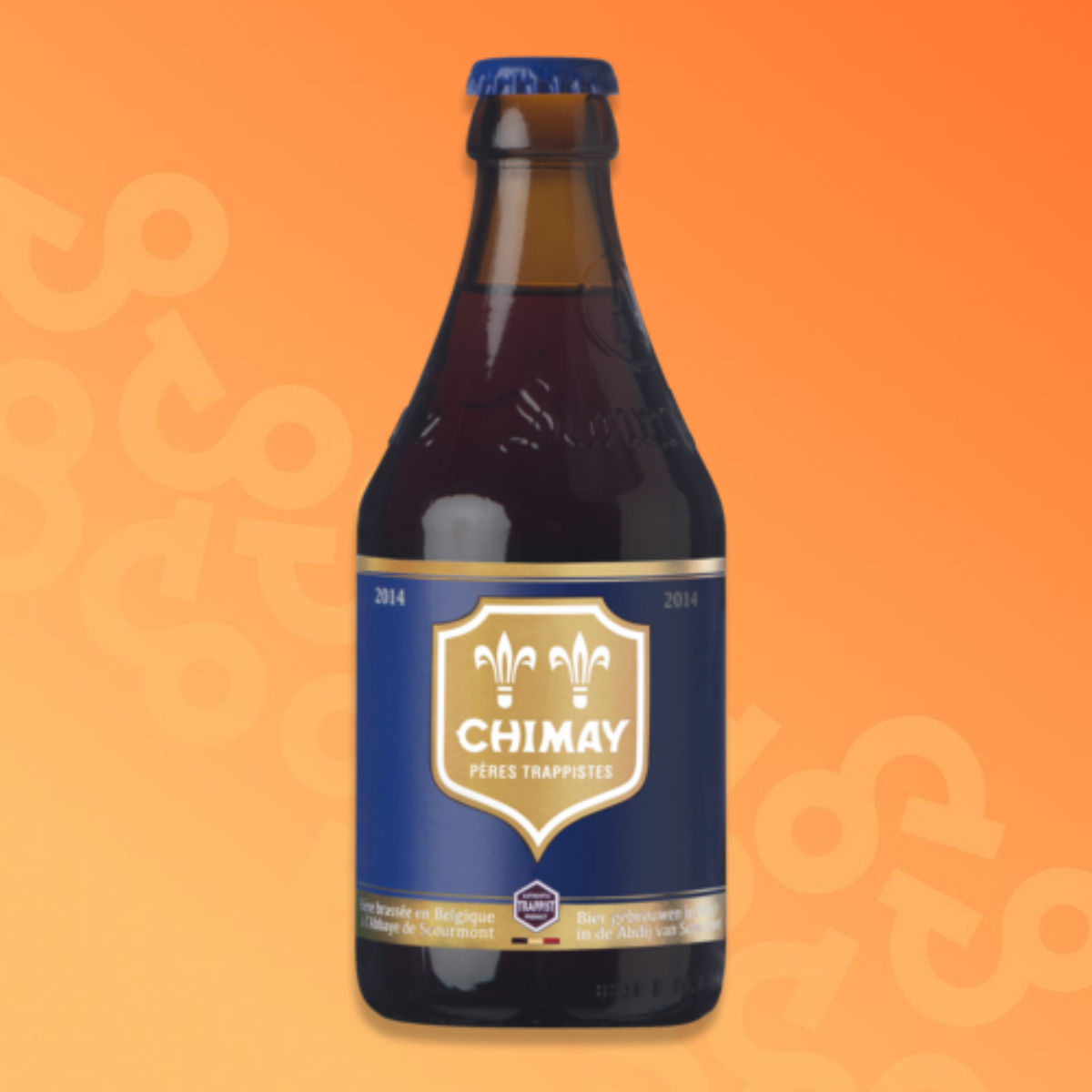
You can recognize Chimay beers by the color of the cap and label. White is the tripel, Blue the strong dark Grande Réserve, and Red a dubbel. There is also Chimay 150, a strong blond beer. All Chimay beers undergo a second fermentation in the bottle, so there is a layer of yeast at the bottom.
In short
Chimay White and Chimay Blue
Gall & Gall sells the two best-known Chimay beers, both in a 33 cl bottle. White is fresh and spicy, while Blue is dark and full-bodied. They are so different that they are great to taste side by side.
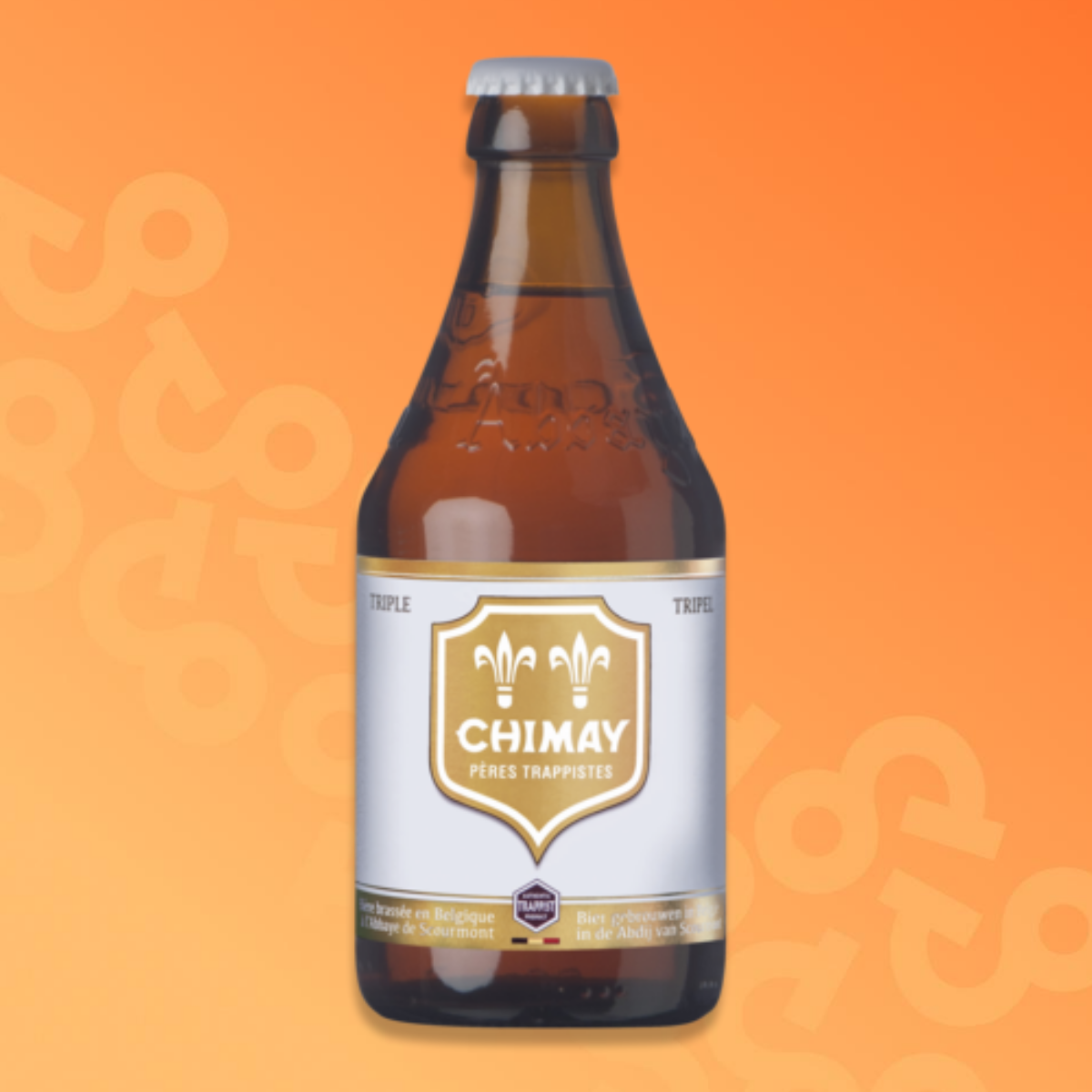
Chimay White (Tripel)
Golden blond, smooth, and lightly bitter. You can taste grapes, raisins, and ripe apple. Also known as Cinq Cents. Best served at 6 to 8 degrees.
Chimay Blue (Grande Réserve)
The classic Chimay. Dark, full-bodied, and warming, similar to a quadrupel. Thanks to bottle conditioning, you can keep it for years.
Which abbeys are allowed to brew Trappist beer, and what is the difference between Trappist beer and abbey beer? Read about it on our Trappist page.
Chimay White is a tripel. Learn how a tripel is brewed and which other ones there are.
Fruity blonde or dark and warming
Fresh and spicy
Soft and lightly bitter, with grapes, raisins and ripe apple. Drier and hoppier than most tripels.
Dark and full-bodied
Caramel, dried fruit and warming alcohol. The beer is round and changes over the years if you store it.
Long and dry
Both beers finish dry. White leaves a slight bitterness, while Blue leaves hints of caramel and spices.
Average flavor profile of Chimay. White scores higher in bitterness and lower in sweetness, while Blue scores higher in sweetness and strength.
How to pour Chimay
Trappist beer should not be served ice-cold. The darker and stronger the beer, the warmer you can serve it.
White cool, Blue warmer
Drink Chimay White at 6 to 8 degrees. Chimay Blue can be served quite a bit warmer, around 10 to 14 degrees, so that its aroma and flavor are fully released. A cool cellar is ideal.
More about pouring beer →Watch out for the yeast
Chimay undergoes bottle fermentation. Pour slowly in one motion and leave the last bit with the yeast in the bottle. If you want the yeast too, pour it separately or briefly swirl the bottle.
Keep a few bottles
You can store Chimay Blue upright and cool. After a few years, it becomes rounder and softer. It's fun to taste a young and an older bottle side by side.
Beer tasting at home →Chimay at the table
Trappist beer belongs with Belgian cuisine: cheese, stew and game. The monks don't make cheese for nothing, either.
Abbey cheese
With Chimay cheese or another semi-soft abbey cheese. White goes with young cheese, while Blue goes with a firm, mature cheese.
Poultry and fish
With roasted chicken, rabbit or fried fish. Also delicious with mussels.
Stews and game
With Flemish stew, venison stew or duck. The caramel in the beer complements a dark sauce.
Chocolate
A glass of Chimay Blue with dark chocolate or a piece of chocolate cake works surprisingly well.
The right glass for Chimay
Drink Chimay from a Trappist glass: a wide goblet on a stem. It allows the aroma to develop fully and leaves room for the head. Choose a glass of at least 38 cl for a 33 cl bottle.


Everything you still wanted to know about Chimay
Can't find your question here? Read more about Trappist beer or get in touch.
Everything about Trappist beer →What is Chimay?
How much alcohol does Chimay contain?
What is the difference between Chimay White and Chimay Blue?
Is Chimay a genuine Trappist beer?
Which glass should you use for Chimay?
How cold should you drink Chimay Blue?
Buy Chimay
Want the bottle at home right away? Order Chimay online from Gall & Gall.
Prices as of October 9, 2026, as provided by Gall & Gall. You can find the current price and stock availability at Gall & Gall. Glazen.nl receives a small commission if you buy something through these links; you pay nothing extra. No under 18s, no alcohol.