





Duvel
Duvel is the well-known strong blond beer from Duvel Moortgat brewery in Breendonk, between Antwerp and Brussels. Light in color, dry, hoppy and with a huge head. Here you can read where the name comes from, which Duvel beers there are, what they taste like and how to pour them.


A Flemish brewery with a devilishly strong blond beer
Duvel comes from the Moortgat brewery, founded in 1871 by Jan-Leonard Moortgat in Breendonk, in Antwerp province. After the First World War, the family brewed a strong beer initially called Victory Ale, in honor of the end of the war. According to the brewery's story, someone tasting the beer called it "a true duvel", Flemish for devil. The name stuck. The brewery is now called Duvel Moortgat. La Chouffe is also part of the group.
Duvel is a strong blond top-fermented beer. It is brewed with light barley malt, aroma hops and proprietary yeast. The extra alcohol comes partly from sugar, which is almost completely fermented. This keeps the beer light in color and dry, despite its 8.5% ABV. After primary fermentation, Duvel matures cold and ferments a second time in the bottle. The entire brewing process takes about ninety days. This secondary fermentation gives it fine carbonation and its famous, tall head.
In brief
Which Duvel beers can you buy?
In addition to regular Duvel, the brewery makes a lighter version and hoppy variants. At Gall & Gall, you will find these five, including a gift pack with a glass.
Duvel
The original. Golden blond, dry and slightly bitter, with a refined aroma and a pronounced hop character. In the familiar 33 cl bulb-shaped bottle and a large 75 cl bottle.

Duvel 6.66%
A lighter Duvel with a playful nod in its ABV. Lightly fruity, with a smooth, full finish. Easier to drink than the original.

Duvel Tripel Hop
A Duvel with an extra hop variety added. This version is brewed with Citra, which gives it notes of orange, lime, and grapefruit. Stronger and hoppier than the standard Duvel.
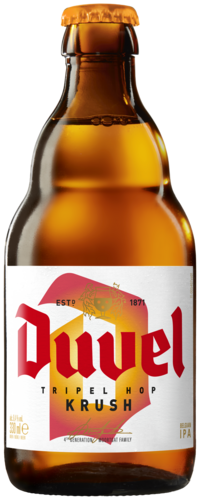
Duvel Krush
A Belgian IPA brewed with Krush hops. Refined and lightly bitter, with notes of tropical fruit.

Duvel Discovery
Four different Duvel beers and a Duvel glass in one box, with a handle on top. An easy gift for anyone who wants to taste the Duvels side by side.
What makes a beer a specialty beer, and how do blond, tripel, and IPA differ? You can read about it on our specialty beer page.
Dry, hoppy, and surprisingly light
Pear, citrus, and hops
Fresh and fruity, with pear, citrus, and a spicy yeast note. Above that, the floral aroma of aromatic hops.
Light, tingling, and full-bodied
Lots of fine carbonation and a lighter body than you would expect from an 8.5% beer. The alcohol is there, but well hidden. Little sweetness.
Dry and bitter
Duvel finishes dry, with pronounced hop bitterness and some warmth from the alcohol. Tripel Hop and Krush are even hoppier, while the 6.66% is smoother.
Flavor profile of the standard 8.5% Duvel. The Duvel 6.66% scores lower for strength, while Tripel Hop scores higher for bitterness and fruitiness.
How to pour a Duvel
Duvel is highly carbonated and forms a tall head. With a cold bottle, a large glass, and a steady pour, you’ll get it nicely into the glass.
Chilled, around 5 to 8 degrees
Duvel is served colder than many other Belgian specialty beers. This keeps it fresh and dry. Take it straight from the refrigerator. Don’t leave the glass standing for too long afterward, because as it warms up, the alcohol becomes more pronounced.
More about specialty beer →Calmly, in a large glass
Hold the glass at an angle and slowly pour the Duvel down the side. Due to its high carbonation, it foams quickly. Only set the glass upright at the end, so the head rises nicely above the rim. A 33 cl bottle calls for a glass of at least 38 cl.
More about pouring properly →Leave the yeast in the bottle
There is a layer of yeast from secondary fermentation at the bottom of the bottle. For a clear glass, pour in one continuous motion and leave the last little bit in the bottle. You can also include the yeast sediment; the beer will then be cloudy and somewhat spicier.
Taste Duvels side by side →Duvel at the table
Thanks to its dry character, bitterness and carbonation, Duvel is a good table beer. It cleanses your palate after fatty and salty foods and can stand up to heat and spices.
Cheese and sausage
Mature and aged cheese, dry sausage and fried snacks. The bitterness and carbonation cut through the fat.
Spicy and Asian
Thai curry, Indian dishes and spicy chicken. Duvel, and especially Tripel Hop, stands up well to heat and spices.
Mussels and fish
Mussels in white wine or beer, fried fish and scampi. A Belgian classic alongside a strong blonde beer.
Salad and chicken
Duvel 6.66% pairs well with lighter dishes: salads, grilled chicken and summer lunches.
The right glass for Duvel
Duvel has its own generously sized, tulip-shaped glass. The rounded bowl leaves room for the large head, while the narrower rim retains the aroma. A tulip glass of 38 cl or more works just as well. Looking for the branded glass? Browse our Belgian beer glasses.


Everything you still wanted to know about Duvel
Is your question not listed? Read more about tasting beer, or get in touch.
To the beer tasting →What kind of beer is Duvel?
How much alcohol is in Duvel?
Where does the name Duvel come from?
Where is Duvel brewed?
Which glass should you use for Duvel?
How cold should you drink Duvel?
Buy Duvel
Want the bottle at home right away? Order Duvel online from Gall & Gall. Gall & Gall has 6.

Prices from October 8, 2026, as provided by Gall & Gall. You can see the current price and stock at Gall & Gall. Glazen.nl receives a small commission if you buy something through these links; you pay nothing extra. No under 18s, no alcohol.